
Wisdom Teeth Removal: Recovery Timeline and Tips

Recovering from wisdom teeth removal can feel a little daunting if you’re not sure what’s normal and what’s not. Swelling, discomfort, and changes to your routine are all part of the healing process, but understanding what to expect can make recovery smoother and less stressful.
This guide explains wisdom teeth removal recovery step by step — from the first 24 hours through to full healing. You’ll also find practical aftercare tips, food suggestions, warning signs to watch for, and answers to common questions patients in Wodonga and nearby areas often ask after their procedure.
Wisdom Teeth Removal: What to Expect
The last teeth to develop are the wisdom teeth, which tend to emerge in late teens or early twenties. Because they erupt later than other teeth, there’s often limited space for them to come through properly.
Wisdom teeth may be removed if they are:
- Impacted (stuck beneath the gum or bone)
- Growing at an angle toward other teeth
- Causing repeated infections or inflammation
- Difficult to clean and prone to decay
- Contributing to crowding or discomfort
The removal procedure itself is typically straightforward. This may be either a simple extraction or a minor surgical procedure, depending on the location of the tooth. Local anaesthetic is used to keep you comfortable, and in some cases, sedation may be recommended.
While the procedure is relatively quick, recovery takes time, and proper aftercare plays a key role in healing well.
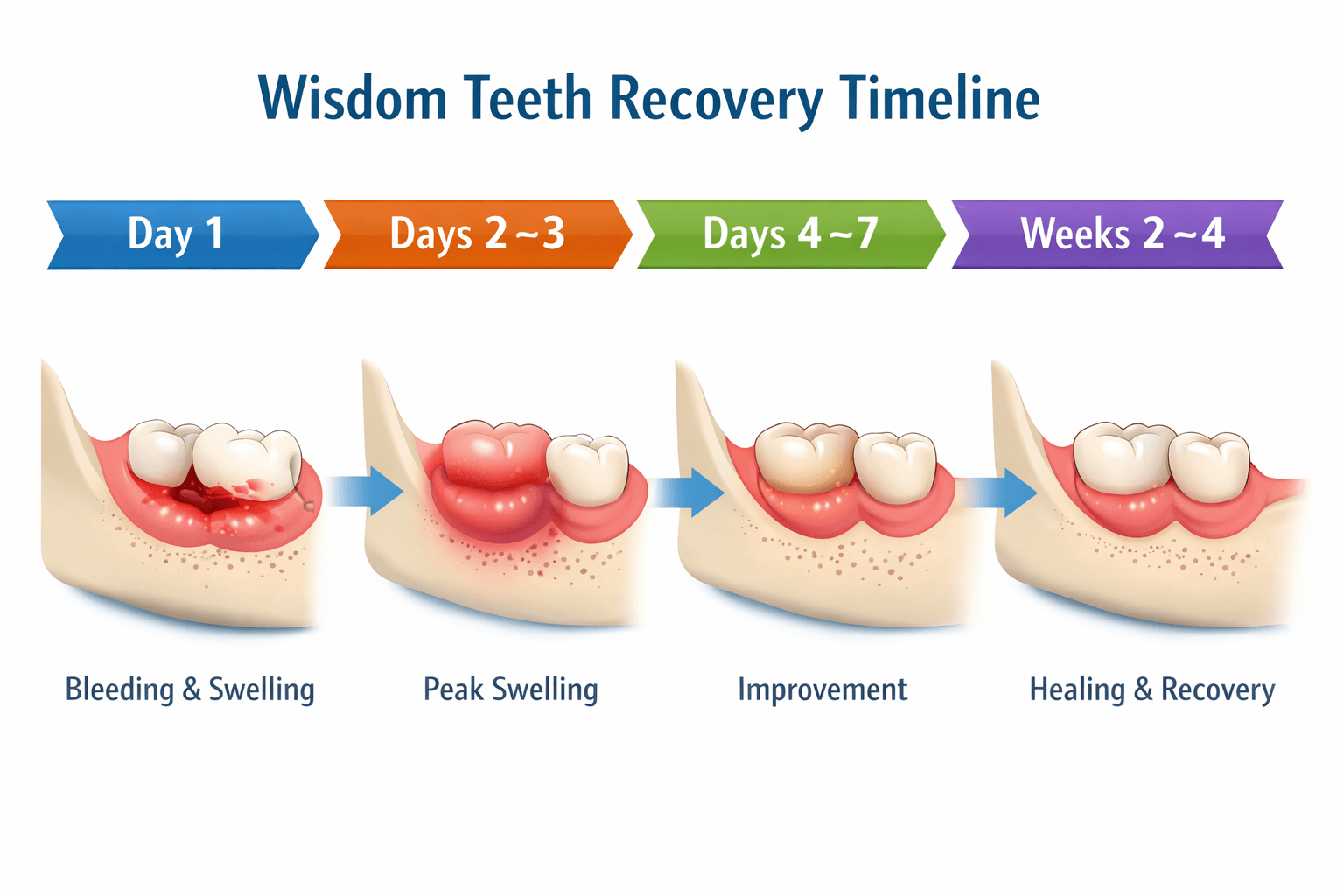
Recovery Timeline Day by Day
Every person heals a little differently, but this wisdom teeth recovery timeline provides a general idea of what most patients experience.
Day 1: Bleeding and Swelling
The first 24 hours are focused on clot formation and rest.
- Mild bleeding or oozing is common
- Swelling usually begins within a few hours
- The area may feel numb at first, then sore as the anaesthetic wears off
It’s important to bite gently on gauze as advised and avoid disturbing the extraction site.
Days 2–3: Peak Swelling
Swelling and jaw stiffness often peak around days two or three.
- Discomfort may increase before it improves
- Bruising around the jaw or cheek can appear
- Opening your mouth fully may feel difficult
This stage is normal and doesn’t mean something is wrong.
Days 4–7: Gradual Improvement
By the end of the first week:
- Swelling starts to reduce
- Pain becomes easier to manage
- You can usually return to light daily activities
Stitches (if placed) may dissolve on their own during this time.
Weeks 2–4: Full Healing
The gums continue to close and strengthen.
- Tenderness should steadily fade
- Normal eating habits gradually return
- Jaw movement improves
Complete bone healing takes longer, but most people feel back to normal within a few weeks.
Managing Pain and Swelling
Effective wisdom tooth extraction aftercare can significantly improve comfort during recovery.
Pain relief options
- Ibuprofen or paracetamol may be administered as instructed.
- Avoid aspirin unless advised, as it may increase bleeding.
Swelling control
- Use an ice pack on the outside of your cheek, in 15-20-minute intervals in the first 24 hours.
- Keep your head elevated when resting or sleeping.
Rest and activity
- Take it easy for the first few days
- Avoid strenuous exercise until swelling subsides
What to avoid
- Smoking or vaping
- Drinking through straws
- Spitting forcefully
- Contact the extraction point with the fingers or the tongue.
These measures may disrupt the healing process and predispose the development of complications.
What to Eat After Wisdom Teeth Removal
Diet plays a big role in how comfortable recovery feels.
Day 1: Liquids and Cool Foods
Stick to gentle options such as:
- Water
- Smooth soups (not hot)
- Milk, smoothies, or meal replacement drinks (without straws)
Days 2–5: Soft Foods
As soreness eases, you can introduce:
- Yoghurt
- Mashed potato
- Scrambled eggs
- Soft pasta
- Blended vegetables
Chew slowly and avoid the extraction side where possible.
Returning to a Normal Diet
Most patients can gradually resume firmer foods after a week, depending on comfort. Crunchy, spicy, or hard foods should be left until healing is well underway.
Dry Socket: What It Is and How to Avoid It
Dry socket is caused by the dislocation or premature dissolution of the blood clot that covers the extraction site.
Common symptoms
- Increasing pain a few days after surgery
- Pain radiating to the ear or jaw
- Bad taste or unpleasant smell
Risk factors include
- Smoking
- Using straws
- Spitting or rinsing too vigorously
- Poor oral hygiene in the area
Following aftercare instructions carefully helps reduce the risk. If you suspect dry socket, contact your dentist promptly for assessment and management.
When to Call Your Dentist After Surgery
While some discomfort is normal, certain signs should not be ignored:
- Bleeding that doesn’t stop after applying pressure
- Pain that worsens after day three
- Fever or signs of infection
- Numbness lasting longer than 24 hours
- Pus, swelling that increases suddenly, or a foul taste
Patients in Wodonga, Albury, Bandiana, Baranduda, or West Wodonga are encouraged to seek advice early if something doesn’t feel right.
Frequently Asked Questions About Wisdom Teeth Removal Recovery
How long should I take off work or school?
Most people take 1 to 3 days off, depending on the discomfort and swelling. Any physically demanding job could take a longer break.
Can I exercise during recovery?
Light activity can usually resume after a few days, but strenuous exercise should wait until swelling and pain have reduced.
When can I brush near the extraction site?
You may brush the rest of your teeth, but not the area within the first 24 hours. After that, gentle cleaning around the site is usually recommended.
How long is the overall wisdom tooth recovery?
Initial healing takes about one to two weeks, while full recovery may take up to four weeks.
What does recovery usually involve?
Most patients experience temporary swelling and mild pain, followed by gradual improvement.
Wisdom Teeth Removal in Wodonga
Recovering well after wisdom teeth removal starts with clear guidance and ongoing support. If you have concerns about healing, pain, or aftercare, a dental check-up can help ensure everything is progressing as expected.
At PrimeCare Dental Wodonga, we provide wisdom teeth removal and post-procedure care for patients in Wodonga and surrounding areas, including Albury, Bandiana, Baranduda, and West Wodonga. Our focus is on helping you understand each stage of recovery so you can heal comfortably and confidently.
Call us on (02) 6024 1516 or book online to arrange an appointment.
Taking the right steps during recovery can protect your oral health and support a healthier, brighter smile over the long term.
Visit us at 340 Beechworth Rd in Wodonga.